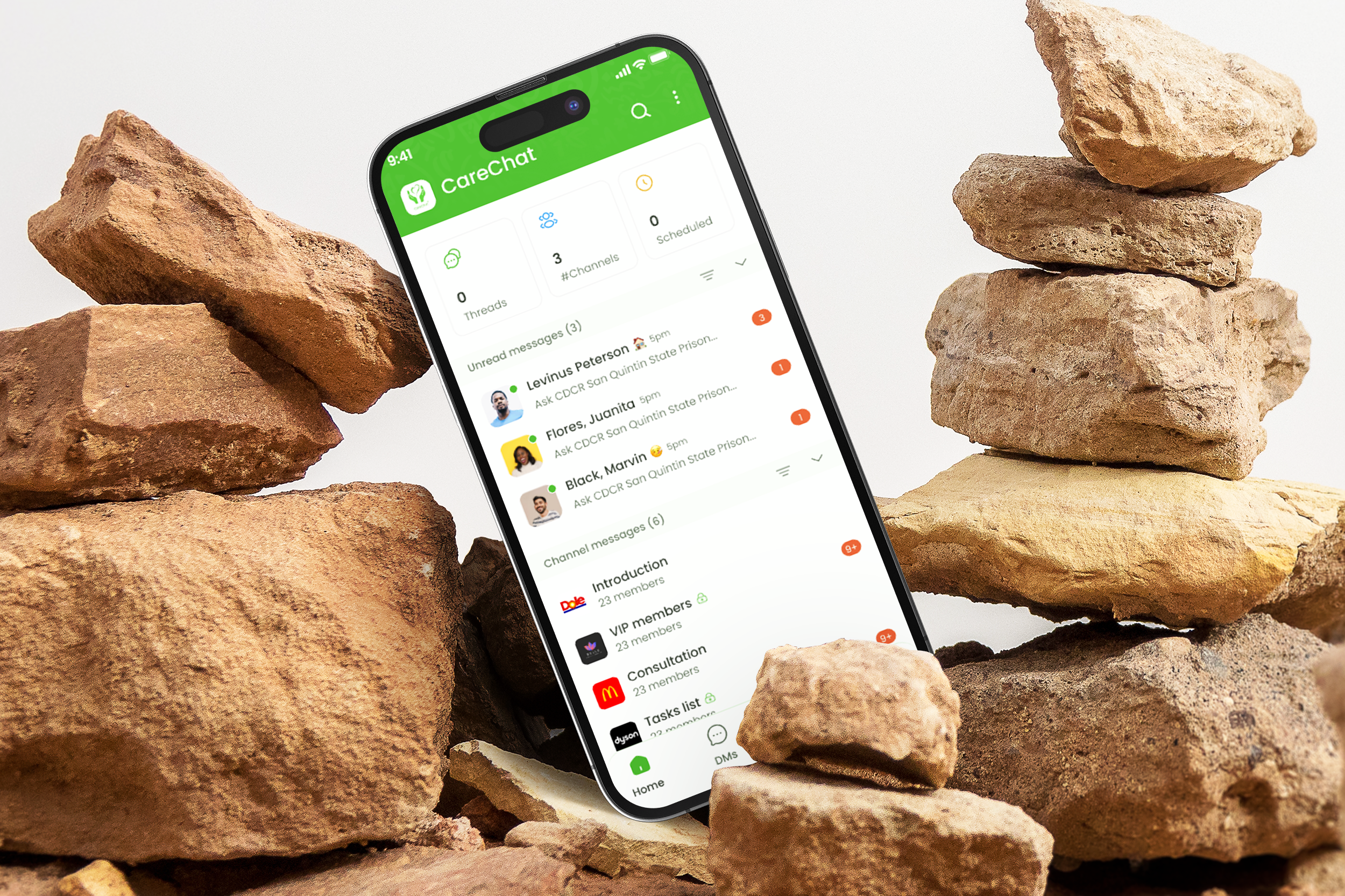
Imagine opening a health app and wondering where your last conversation went, who can see a message, or which channel to use. I designed CareChat to make those choices easier to understand.
I led the design from product structure and user flows through wireframes, interface design, prototypes, and shared patterns. I connected private messages, organizations, and community channels into one mobile experience.
Team
Malvin YaaBari
Product Designer
Cross-functional partners
Product management, product ownership, and frontend and backend engineering
CareChat is a messaging product for patients, providers, and health communities. It supports private conversations, group consultations, and organization-based channels. Those spaces serve different purposes, so the design needed to make their boundaries clear.
Across a 16-week design engagement, I worked on onboarding, joining an organization, creating channels, managing threads, and direct messages and calls. I kept returning to the relationship between a person, their organization, and the conversation they needed.
Challenge
A message is only useful if it reaches the right place.
Scattered communication makes it harder to follow up and understand who is involved. Bringing everything into one app would only help if people could tell private care from a group discussion and find their way back to the right thread.
For patients
Make the route to a conversation understandable without asking people to learn a complex workspace.
For providers
Keep messages and threads organized enough to support follow-up.
For organizations
Make membership and channel structure clear as the community grows.
Discovery & strategy
I designed the relationships before the screens.
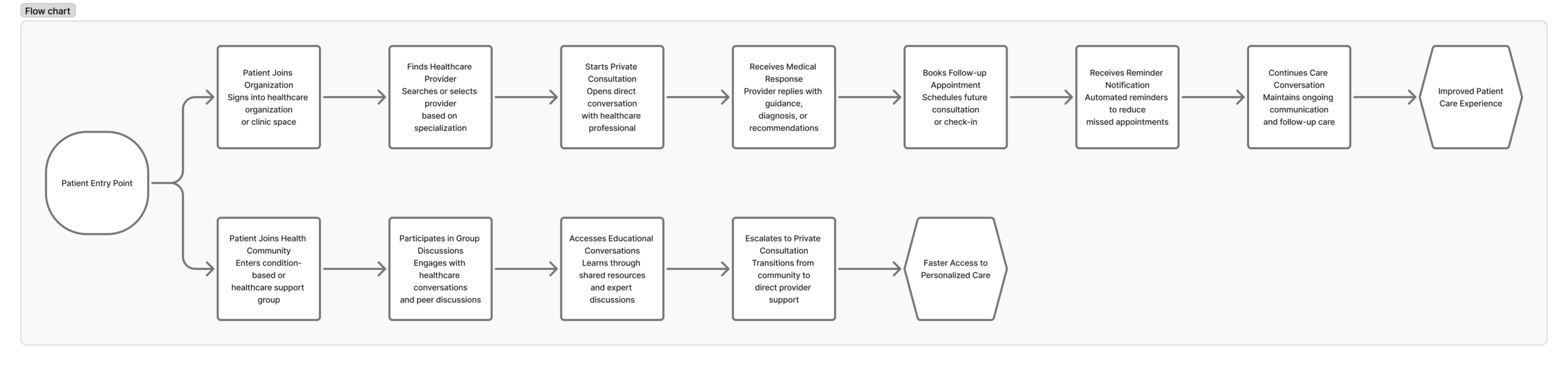
I reviewed the communication problems and mapped the journeys through onboarding, membership, and messaging. The useful question was simple: does someone know where they are, who they are talking to, and what they can do next?
A clear boundary matters
Private messages and shared channels need different context, even when they use familiar messaging patterns.
Joining is part of the experience
Finding an organization and entering the right channel should feel connected to the reason someone opened the app.
Design decisions
Keep the conversation clear around the edges.
Open a decision to see what I chose, the trade-off, and the question I would use to evaluate it.
Make the organization visible.
The choice. I gave organization membership a clear place in the journey so channels have a recognizable context.
The trade-off. Showing more context uses space, but removes the need to remember which workspace a conversation belongs to.
What I would check. I would ask people to identify their current organization before moving between channels.
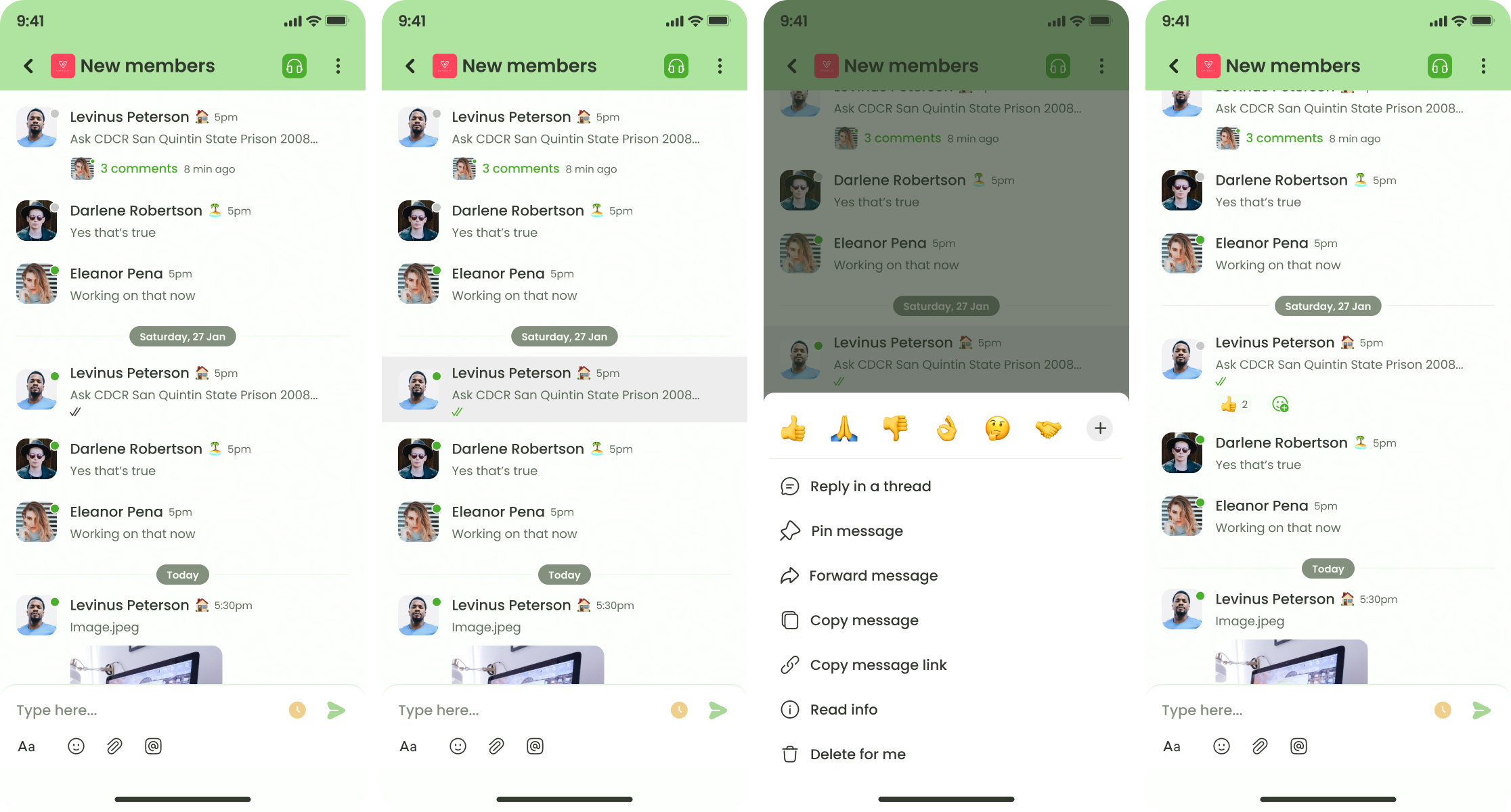
Keep threads attached to their conversation.
The choice. I used threads to keep a reply close to the message it refers to.
The trade-off. A thread adds another level of navigation, so returning to the wider conversation needs to remain easy.
What I would check. I would check whether someone can find a reply and return to the main conversation without losing their place.
Use familiar patterns with clear labels.
The choice. I kept messaging, direct contact, and calls recognizable while making their destinations explicit.
The trade-off. Familiar icons help scanning, but an icon alone can leave the action open to interpretation.
What I would check. I would test the labels, touch targets, and navigation with people who have different levels of digital confidence.
Solution
See how the conversations come together.
Choose a journey below. Each set of screens shows a specific design decision in context; open an image to inspect the details.
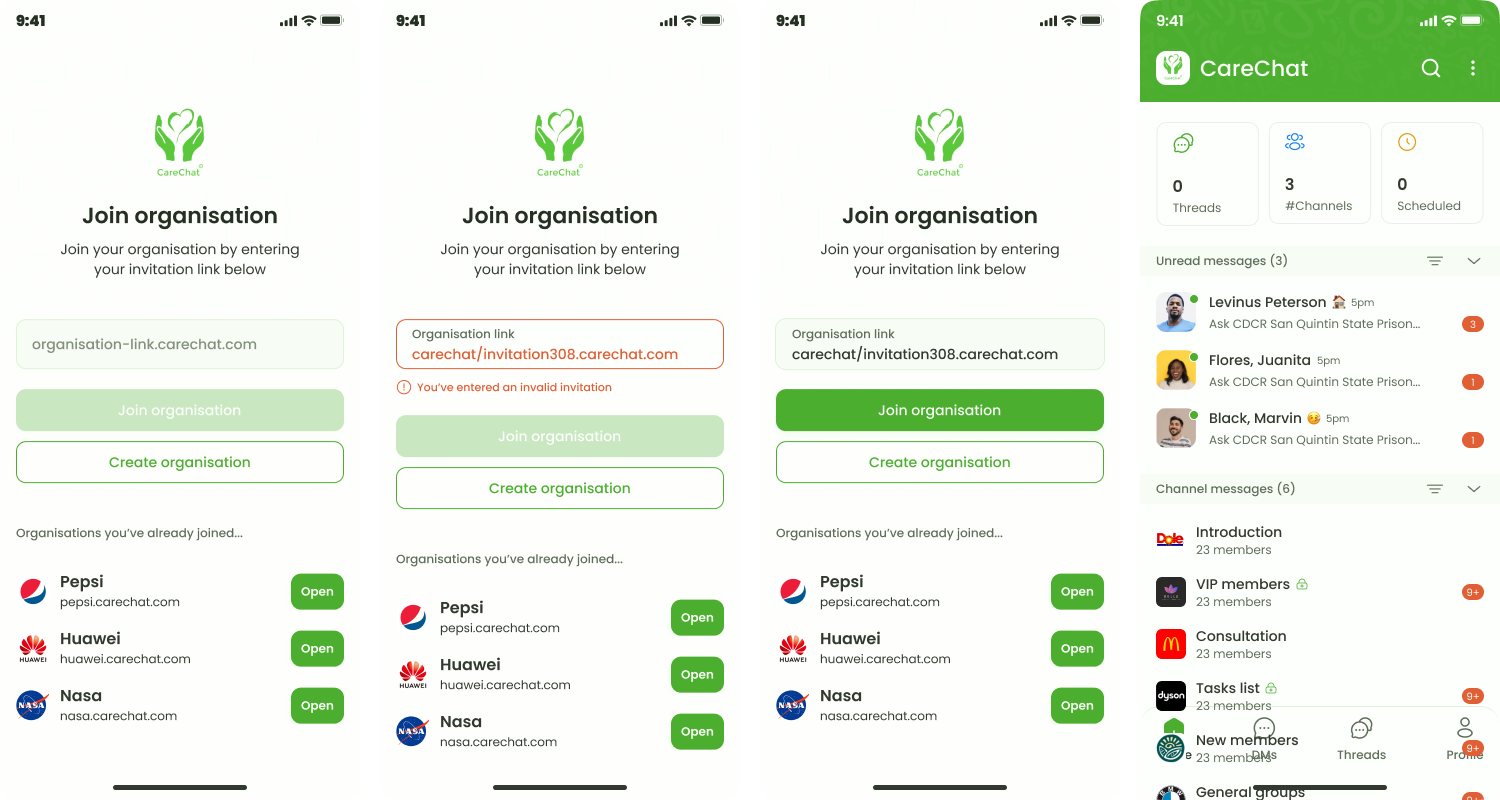
Start with a clear place to belong.
The organization journey brings discovery, selection, and joining into a focused sequence. I wanted someone to understand the workspace they were entering before conversations began.
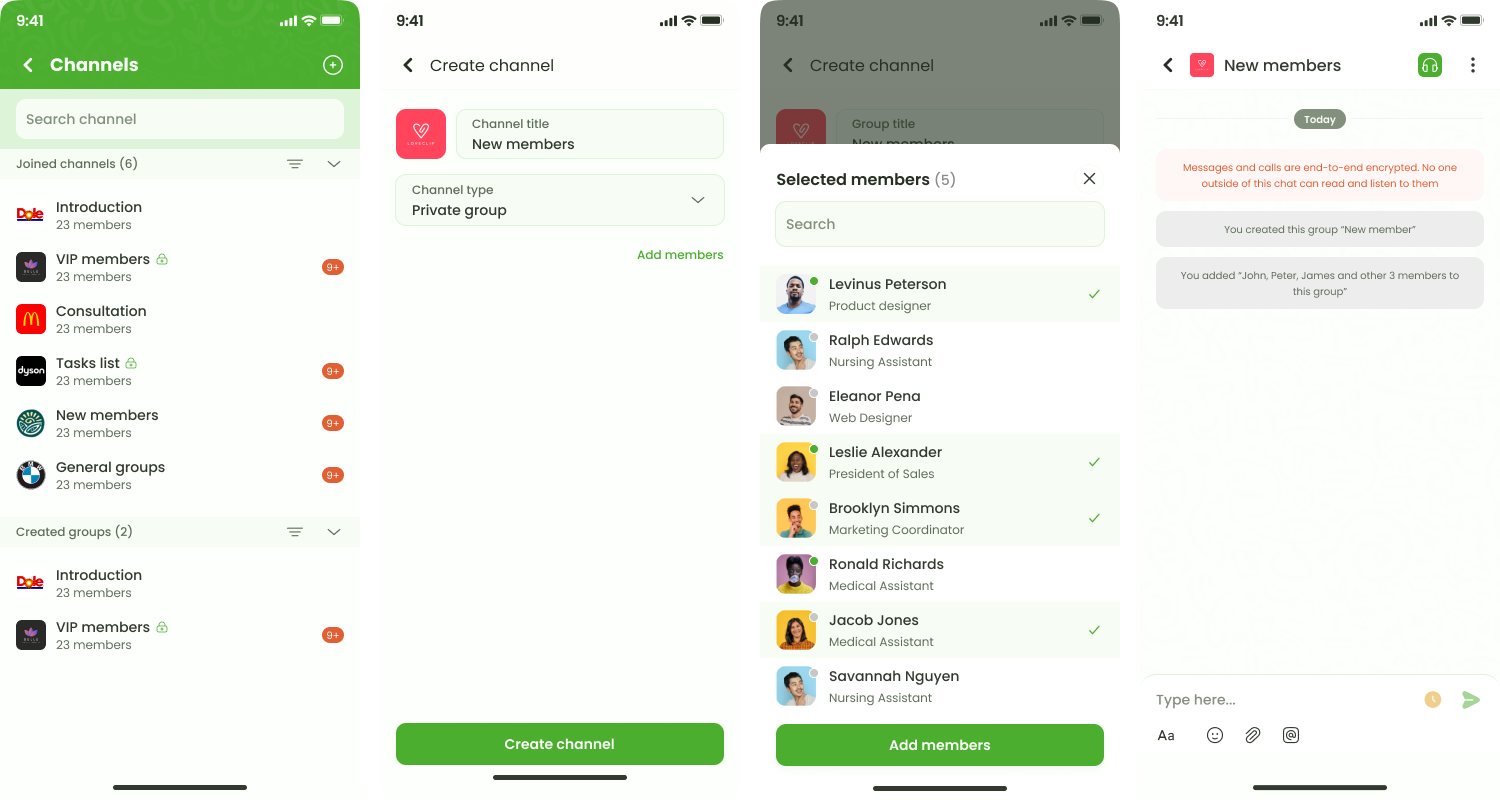
Give a shared conversation a clear purpose.
Channel creation connects the topic with the people involved. That structure helps the channel feel intentional instead of becoming another undifferentiated group chat.
Keep the reply with the conversation.
Threads preserve the relationship between a message and its replies. The wider channel remains the place someone can return to when they need the full context.
Outcomes & learnings
A clearer structure for staying in touch.
The delivered design connects organizations, channels, threads, and direct contact through a consistent mobile structure. It makes the intended communication model visible, rather than leaving people to work it out from a crowded inbox.
A recognizable place
Organizations give conversations a shared context.
Focused discussions
Channels and threads keep related messages together.
Connected journeys
Onboarding leads into the work of finding and joining a conversation.
What I would take into the next iteration.
For me, the next question is how clearly those boundaries hold up in use. I would focus further evaluation on private-versus-shared understanding, finding a missed conversation, and accessibility across different levels of digital confidence.